'Just Use AI': How to Protect Your Craft Without Blowing Up the Gig

The email arrives on a Tuesday. Scope attached, budget attached, and one line near the bottom: 'Feel free to just use AI for the heavy lifting.' No hostility in it. The client thinks they're being generous. They're handing you a chance to finish early.
What they're actually doing is asking you to change what you're selling without changing what they're paying.
That's a negotiation problem before it's an ethics problem, and treating it as the second one is how freelancers end up either quietly resentful or loudly unemployed.
The ask behind the ask
When a client says 'just use AI,' they usually mean one of four things, and the correct response is different for each.
- They want a lower price. AI is the polite way of saying the budget is tight.
- They want speed. A launch moved, a stakeholder got nervous, someone needs something by Friday.
- They genuinely don't understand the process. They think the tool does the job the way a calculator does arithmetic.
- They've been pitched a fantasy by a conference talk or a cousin who 'made a whole brand in an afternoon.'
Diagnose before you respond. The freelancer who answers all four with the same lecture about craft is the freelancer who gets quietly dropped from the vendor list.
Get specific, or get steamrolled
Vague agreements are where standards go to die. 'We'll use AI where appropriate' means the client decides what appropriate means, later, when they're behind schedule.
Pin it down while the mood is still friendly. Which deliverables are affected? Is it drafting, ideation, image generation, copy, production files? Is there a brand or legal policy already in place? Has anyone on their side already published something generated and had to walk it back?
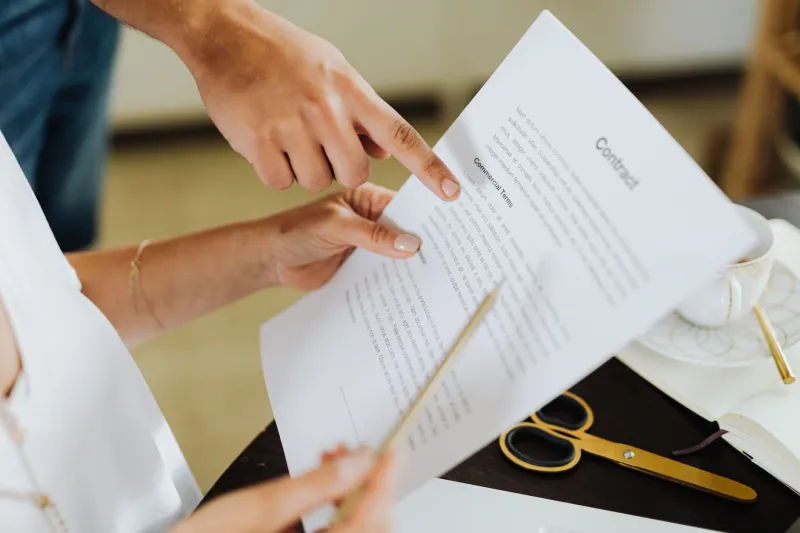
Then write it into the scope in plain language. Something like: 'Concept development, art direction, and final artwork will be human-created. AI tools may be used for internal research and rough composition studies only; none will appear in delivered assets without written approval.'
That paragraph has ended more arguments than any thread on social media ever will.
Price the difference, not the guilt
Here's where freelancers get squeamish. If a client asks you to compress three days of work into an afternoon, the price doesn't stay the same just because the tooling changed. Your rate reflects judgment, not keystrokes.
Offer two tiers. A leaner option where AI handles the throwaway work and you focus hours on the parts that carry the brand, priced accordingly. And a full-craft option where you handle everything by hand, priced the way you'd normally price it. Most clients pick somewhere in the middle, and everyone knows what they bought.
What you should not do is quietly absorb the risk. If the output might need rework because it was generated fast, say so up front, in writing.
Document the human layer
If AI touches a project at all, keep a short record. Which tools, which stages, what you personally directed, revised, or rejected. Two reasons, both practical.
First, rights. US copyright guidance has been drifting toward requiring meaningful human authorship, and clients in publishing, education, and regulated industries are already asking for provenance. Being the freelancer who can answer that question is a competitive advantage, not a chore.
Second, reputation. If something ships and looks off, you want a paper trail showing where the decisions were made and by whom. Freelancers eat the blame for output they didn't choose. Documentation is how you avoid being the convenient explanation.
Pitch craft as an outcome
This is the part that actually changes minds. 'I don't like AI' is a preference. 'The last three brands in your category that launched with generated visuals got called out in the trade press within a month' is a business case.
So is this: your client's customers are drowning in sameness. Stock imagery already flattened one decade of brand voice. Generated visuals are flattening the next one faster and cheaper. Distinctiveness is the scarce thing now, and scarce things command a premium.
Say that without a whine in your voice. You are not the last defender of a dying craft. You are a supplier explaining where the value is.
When to walk
Some requests are just education and the relationship survives fine. Others are a preview of the next eighteen months, and you can see the pattern already.
Walk when the client asks you to sign off on authorship you didn't do. Walk when they want final artwork delivered but refuse to disclose how it was made. Walk when the promise is 'we'll fix it later' and later never has a date.
That's not a moral stand. It's a portfolio decision. Your name goes on the work either way, and the work outlives the invoice.
The Tuesday email, answered
Back to that message. A response that keeps the gig and the standards looks something like this: thanks for the flexibility, here's how I'd use those tools, here's what I'd keep by hand and why, here's what each version costs, and here's the one thing I'd want us both to agree on before I start.
Calm. Specific. Priced. Nobody gets lectured, nobody gets steamrolled, and you don't spend the weekend resenting a project you chose to take.