The Zip Code Advantage: Your Creative Career Doesn't Need a Bigger Market
There's a version of the creative career story that gets told constantly: move to a bigger city, get discovered, scale your audience, repeat until famous. It's a tidy narrative. It's also the reason a lot of talented people in midsize American cities spend their twenties apologizing for where they live.
Here's the other version, the one that doesn't get a documentary. You stay. You show up. You become the person everyone in a three-county radius calls when they need the thing you do. It's slower to describe at a party. It works surprisingly well.
The myth of the only three cities
Yes, New York, Los Angeles, and Chicago concentrate opportunity. They also concentrate competition, rent, and the particular exhaustion of being the fortieth most interesting designer in a five-block radius.
Meanwhile, plenty of cities have a real cultural economy and a thin supply of people who can execute: Kansas City, Milwaukee, Richmond, Columbus, Albuquerque, Savannah, Grand Rapids, Tacoma. Museums, regional theatre, breweries with actual design budgets, hospital systems rebranding, universities with alumni magazines nobody wants to art direct. The work exists. The bench is short.
Being early to a smaller bench is not settling. It's positioning.
Local is a distribution strategy
Most creative careers stall not because the work is bad but because nobody knows it exists. Online, you're competing with everyone on earth for a fraction of a second of attention. Locally, you're competing with maybe a dozen people, and you can meet them in person.
A single in-person connection in your own city is worth a hundred passive followers. That's an exaggeration, but only barely, because local relationships come with something a feed never has: repeated exposure. You see the same people at openings, talks, coffee shops, and client meetings. Repetition builds trust. Trust converts to referrals. Referrals convert to invoices.
The studio visit economy
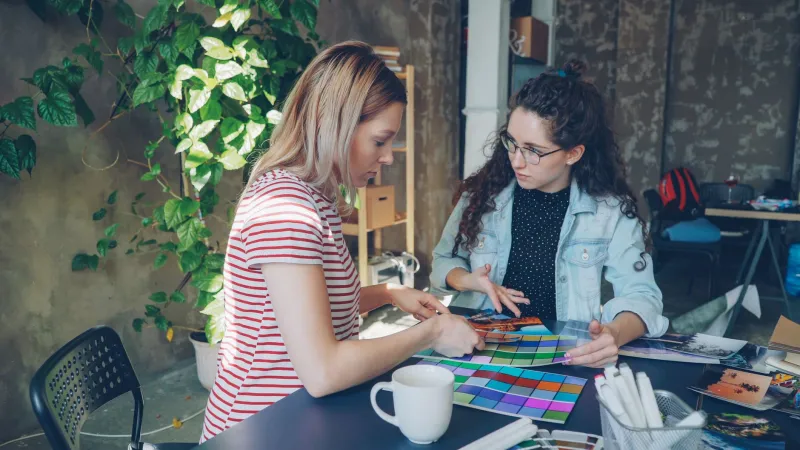
One of the most underrated moves in a creative career is the humble studio visit. Invite people into your workspace before you have anything impressive to show them. A half-finished wall, a stack of failed prints, a notebook with three good ideas and forty bad ones.
People who see the messy middle become invested in the outcome. They also become your best salespeople, because they can describe your process to someone else. 'You should see how she works' is a stronger referral than 'her portfolio is nice.'
Do this with a curator, a marketing director at a local nonprofit, a founder you met at a chamber event, another designer you admire. Keep it short, keep it unpretentious, and follow up with one thing you talked about. That follow-up is the whole game.
Regional identity as a differentiator
There's a reflex to sand off anything local so the work can travel. Flip it. What's specific about where you are is often the only thing that can't be replicated by someone in a cheaper market or a faster model.
A designer in rural Montana who understands ranch branding and land conservation has an expertise no coastal generalist can fake. A photographer in Cleveland who documents Great Lakes industrial decline has a body of work with a point of view. Regional fluency is domain knowledge, and domain knowledge is what clients pay for when the assignment gets complicated.
That doesn't mean making every project a postcard. It means letting your context inform your taste instead of hiding it.
The boring mechanics of word of mouth
Local reputation is built through unglamorous repetition, and most of it happens off-screen.
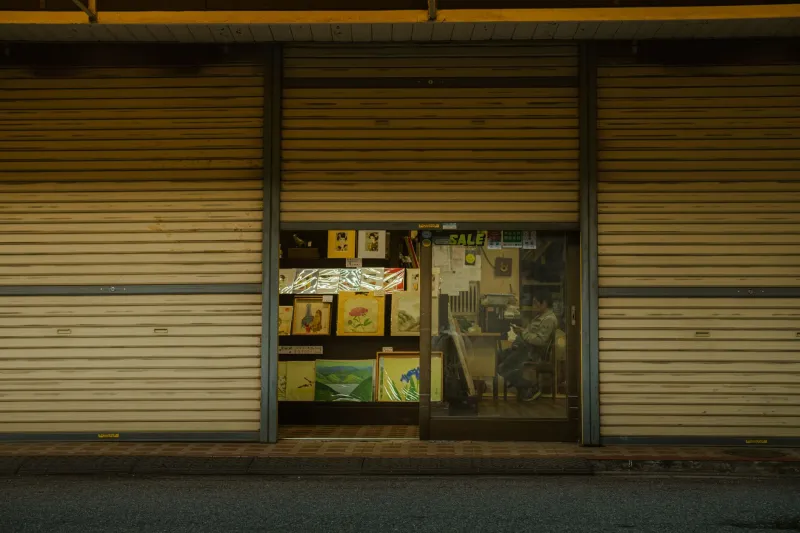
- Show your work in public. Community shows, library exhibits, restaurant walls, pop-ups at the farmers market. Every wall is a portfolio page with a mailing address attached.
- Teach one thing. A workshop at the arts center, a free session at the small business development office, a portfolio review night. Teaching signals authority faster than posting does.
- Join the boring boards. The downtown association, the arts council, the committee that hires the muralist. Half of local creative work is awarded in rooms where nobody is talking about design.
- Answer your email like a local business. Same-day replies, clear invoices, show up when you said you would. In a small market, reliability is a competitive advantage that costs nothing.
- Collaborate outside your discipline. The woodworker, the sign painter, the indie bookstore owner, the brewer. Cross-discipline projects reach audiences that don't follow designers.
None of this goes viral. All of it compounds.
Plugging in without being annoying
Newcomers tend to do one of two things: lurk online and wait to be invited, or show up with a portfolio and a pitch. Both are lonely.
Try a third approach. Pick one organization and one recurring event a month, and become a familiar face. Offer to help set up chairs. Ask people about their work instead of describing yours. Bring someone else's name up in a conversation where it helps them. Within six months you'll be inside the loop, and you won't have handed out a single business card at a networking mixer.
The honest ceiling question
Does staying local limit you? Sometimes, yes. Certain clients, certain budgets, and certain career ladders only exist in bigger markets. If your ambition requires a specific industry concentration, go where it lives.
But the internet solved the distance problem for the work itself. You can ship files from Iowa to anywhere. What you can't ship is presence. Local scenes reward people who are physically there, and that's an edge that doesn't get outsourced or automated anytime soon.
What the backyard actually offers
Less noise. Shorter feedback loops. Cheaper mistakes. Real relationships with the people who hire, fund, and talk about creative work in your town. A reputation that's built on being known rather than being seen.
That's not a smaller version of a real career. It's a different shape of one, and for a lot of people it fits better than the version they were handed.