Make It in the Dark: The Case for Work Nobody Sees
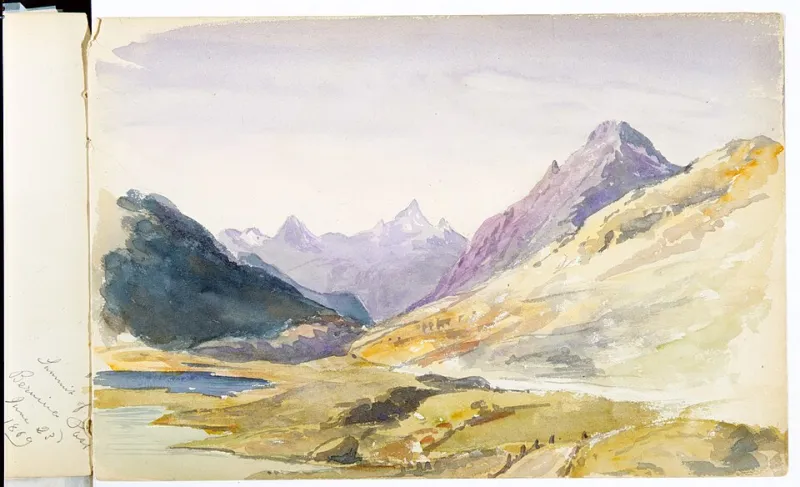
Photo: John Singer Sargent, CC0, via Wikimedia Commons
There's a folder on my desktop called no. Inside it are maybe two hundred files: abandoned logos, half-drafted essays, a color palette I was convinced was genius at 1 a.m. and couldn't defend by breakfast. None of it has ever been seen by anyone. It's the most valuable thing I own.
That folder is where the actual work happens. And it's the first thing we sacrifice when we start treating every idea like content.
The Posting Reflex
Somewhere along the way, sharing became the default setting. You sketch something on a Tuesday, it's on a grid by Tuesday night, and by Wednesday morning you've got twelve comments telling you what it should be. Iteration in public, they call it. Build in the open. Let the audience be part of the process.
It sounds generous. Often it's just anxious.
Because the moment you post a draft, you've handed the steering wheel to a room full of people with different taste, different goals, and no stake in the finished thing. You get feedback before you've figured out what you're even trying to say. And the idea — which needed six quiet weeks to become itself — gets flattened into whatever version pleased the most people fastest.
What the Camera Does to a Room
Here's what nobody puts in the thread: the presence of an audience changes how you make the thing. Not slightly. Structurally.
When you know someone's watching, you stop taking risks that might look stupid. You start reaching for the move that reads as clever in a screenshot. You sand down the weird parts — the parts that were the whole reason the idea was interesting — because a stranger scrolling past won't give them time to land.
Private work has no optics problem. Nobody's screenshotting a sketchbook. You can be bad in there. You can be embarrassing. You can make the version that only makes sense if you've been thinking about it for three weeks straight, and then you can make it again, better.
That's not a luxury. It's the mechanism.
What a Private Season Actually Looks Like
A private season isn't a vow of silence or some monkish retreat from the internet. It's a bounded period — six weeks, three months, whatever the project needs — where the work is allowed to stay unfinished in public view.
A few things that actually help:
Draw the boundary in your calendar, not your intentions. Pick a start and end date. Say it out loud to yourself. An open-ended quiet period quietly turns into creative avoidance.
Use a real container. A physical sketchbook, a folder that never gets exported, a project file with draft in the name. Friction matters. If posting is one tap away, you will tap it at your most insecure moment.
Pick one reader, not an audience. One person whose judgment you trust, who understands that work-in-progress is supposed to be in progress. That's the entire feedback loop until the season ends.
Expect the itch. Around week two you'll want to post something. That impulse is usually not about the work — it's about wanting proof you exist. Notice it. Don't obey it.
Keep a private log. Notes on what you tried, what failed, what surprised you. This is the receipt for the season, and it's worth more than the likes you didn't collect.
Visibility Is Not Value
This is the part I actually want to argue.
We've quietly conflated being seen with mattering. A body of work that nobody watched get made must be less serious than one documented in real time. A project without a process reel must have come from nowhere. Every finished thing arrives trailing its own making-of, and if there isn't one, we wonder what's being hidden.
But the audience has never been the point. The work is the point. And the work does not require witnesses during gestation — in fact, it usually gets worse when it has them.
Think about the last thing you made that genuinely surprised you. Chances are it came out of a stretch where nobody knew what you were up to. No thread announcing the concept. No big things coming. Just a long, quiet, slightly boring stretch of sitting with something until it told you what it was.
That's what's being lost. Not privacy in the paranoid sense — the ordinary privacy of an unfinished thought.
The Exception Worth Making
I'm not arguing for total opacity. Sharing finished work is how creative careers get built, and there's real value in showing process once the process has actually happened.
The distinction is timing. Show the work after it can survive being looked at. Show the process when you understand it well enough to explain it. But don't bring an audience into a room where something is still figuring out what shape it wants to be.
So: pick something you're working on right now, something you've been quietly nibbling at. Don't post it. Put a date on the calendar three months out and leave it alone until then.
Then notice how differently you treat it when nobody's coming to check.