Your Feed Is Designing Your Work (And You Don't Even Know It)
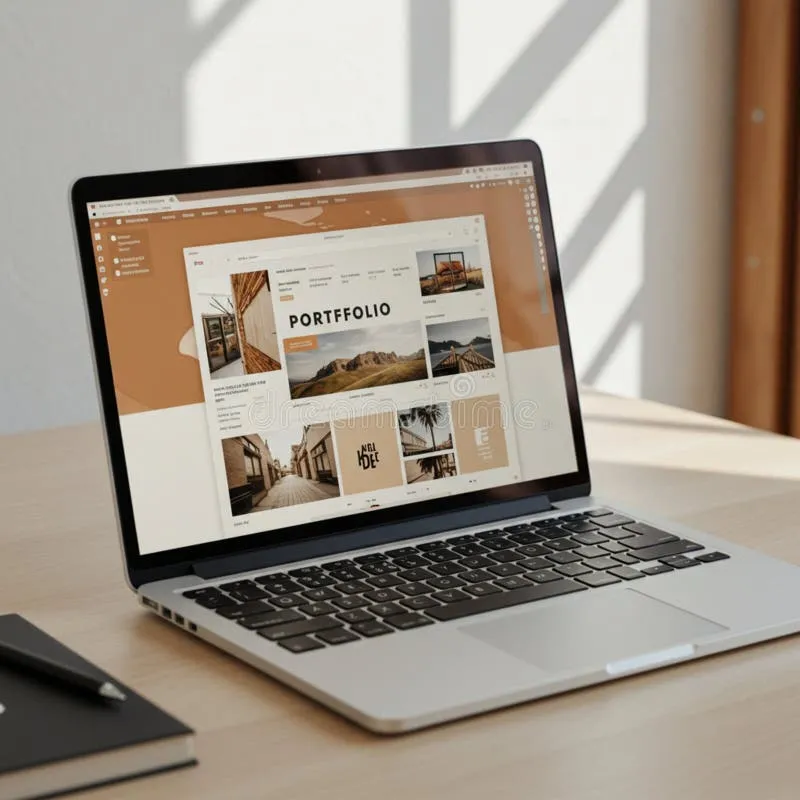
Photo: designer scrolling portfolio website on laptop surrounded by sketches, via thumbs.dreamstime.com
The Invisible Hand Shaping Your Creative Decisions
Here's something nobody really talks about at design school or in those glossy "how to build your portfolio" YouTube videos: the more time you spend looking at other people's work, the more your own work starts to look like theirs. Not because you're lazy. Not because you're untalented. But because that's just how human brains work under sustained exposure.
Psychologists call it availability heuristic — we tend to judge quality and correctness based on what comes to mind most easily. For creatives, that means the aesthetic choices flooding your feeds become the invisible benchmark for what "good" looks like. You open a new project file with genuine intentions, and somewhere between the blank canvas and the first real decision, your brain quietly references everything it's been fed for the past six months.
The result? A slow, creeping homogenization that nobody planned and almost everyone participates in.
When Inspiration Becomes Imitation (Without Trying)
There's a meaningful difference between deliberate plagiarism and what researchers sometimes call unconscious mimicry — and the latter is far more common in creative industries than anyone wants to admit. A 2022 survey by the Design Industry Forum found that nearly 68% of junior designers reported feeling like their work "looked like everyone else's" within their first two years of heavy social media use. That's not a coincidence.
The mechanics are worth understanding. When you see a piece of work you admire — say, a brand identity using that specific combination of muted earth tones and brutalist typography that's been everywhere since about 2021 — your brain doesn't just file it as "something someone else did." It files it as an example of what works. Then, when you're under deadline pressure or creative uncertainty, your brain reaches for what it knows works. And suddenly you're making choices that feel intuitive but are actually borrowed.
This is especially acute on platforms like Dribbble and Behance, which are algorithmically structured to surface the most-liked, most-saved work. That means you're not seeing a random cross-section of creative output — you're seeing a curated highlight reel of whatever the crowd has already validated. You're essentially training yourself on consensus taste.
The Portfolio Scroll Has a Price Tag
None of this means you should stop looking at other people's work entirely. That would be both impractical and counterproductive — staying informed about what's happening in your industry is a real professional responsibility. But there's a difference between informed and saturated.
Consider how many times in a given week you open a design showcase, a creative newsletter, or a competitor's website — not because you have a specific question to answer, but just because it's there and the habit is comfortable. That passive consumption is where the erosion tends to happen. You're not researching; you're marinating.
One practical approach: treat portfolio browsing like a meeting. Give it a purpose and a time limit. "I'm spending 20 minutes looking at how other illustrators handle editorial work because I have a similar brief next week." That's research. Ninety minutes of ambient scrolling because you're procrastinating on the actual project? That's feeding the mimicry engine.
Building Walls Around Your Own Voice
Developing a genuinely distinctive creative voice requires something that feels almost counterintuitive in an industry obsessed with staying current: deliberate periods of looking away.
Some of the most interesting creative voices working today — designers, illustrators, art directors — talk about building what you might call "input fasts." Not permanent abstinence from other people's work, but intentional stretches where the only visual references they allow themselves come from outside the design world entirely. Architecture. Botany. Old cookbooks. Regional newspaper archives. Anywhere that the algorithmic curation of creative platforms can't reach.
The goal isn't to be ignorant of what's happening in the industry. It's to ensure that your foundational instincts are rooted in something personal and specific to you — not in whatever aesthetic is currently winning the most likes on a design showcase.
Another underused strategy: document your own process obsessively, and do it before you go looking at references. Sketch out your initial instincts on a brief before you open a single portfolio for inspiration. You'll be surprised how often those raw, uncontaminated ideas are more interesting than what you arrive at after two hours of "research."
Staying Informed Without Getting Absorbed
There's a version of this conversation that veers into creative snobbery — the idea that truly original artists never look at anything and work in pure isolation. That's both false and kind of obnoxious. Influence is real, collaboration is valuable, and knowing what your peers are doing is legitimately useful.
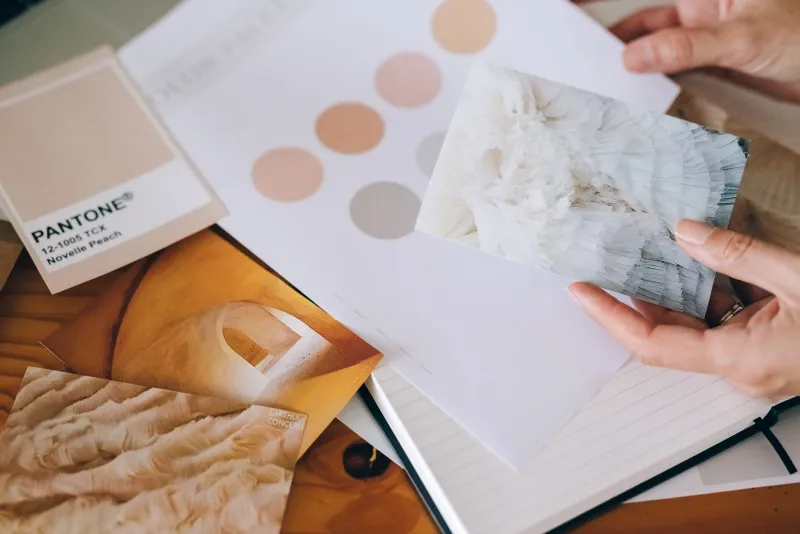
The healthier frame isn't "stop looking" — it's "look with intention and then close the tab." Curate your inputs the same way you'd curate a moodboard: with a specific purpose in mind, and with clear edges that tell you when you're done.
It also helps to actively seek out work from outside your immediate peer group. If you're a UI designer, spend time with print designers, textile artists, and muralists. If you're a brand identity person, go deep on architecture photography for a while. Cross-pollination tends to produce more original work than staying exclusively within your own category's feedback loop.
The Originality Isn't Gone — It's Just Buried
Here's the thing about creative originality: it doesn't actually disappear under the weight of constant exposure to other people's work. It just gets harder to hear. The signal is still there; it's the noise that's gotten louder.
The practical work of protecting your creative voice is less about talent and more about information hygiene. What are you letting in? How often? For what purpose? These aren't romantic questions about artistic purity — they're operational questions about how you do your best work.
Your perspective, your references, your specific combination of influences and lived experience — nobody else has that exact mix. The feed doesn't know what to do with it. That's actually the point.